We're accepting design partners for predictive maintenance you can check
Haltless is opening a small number of design-partner spots before its Q1 2027 launch. Here's what it takes, what you get, and what you'd be testing.
- design-partners
- explainability
- audit
We’re opening a small number of design-partner spots ahead of our public launch in Q1 2027.
If you run maintenance or reliability at a plant, this is your chance to put Haltless on your own machines before general availability, work directly with the founder, and have a say in what ships first. It takes one Linux box, read-only access to your PLCs and one outbound connection.
We’re pre-launch, so we have no case studies and no customer logos to show you. You’d be checking our work on your own machines. We’d rather be judged that way anyway.
What do design partners get?
Haltless on real machines before general availability. Your assets and your alarms, on your line, instead of a vendor’s demo dataset.
Direct work with the founder. At this size, the person answering your question is the person who wrote the code. There’s no first line to get past.
A say in what ships first. We’re still deciding what to build next, and the problems you hit on your floor can move something up the list.
What does it take?
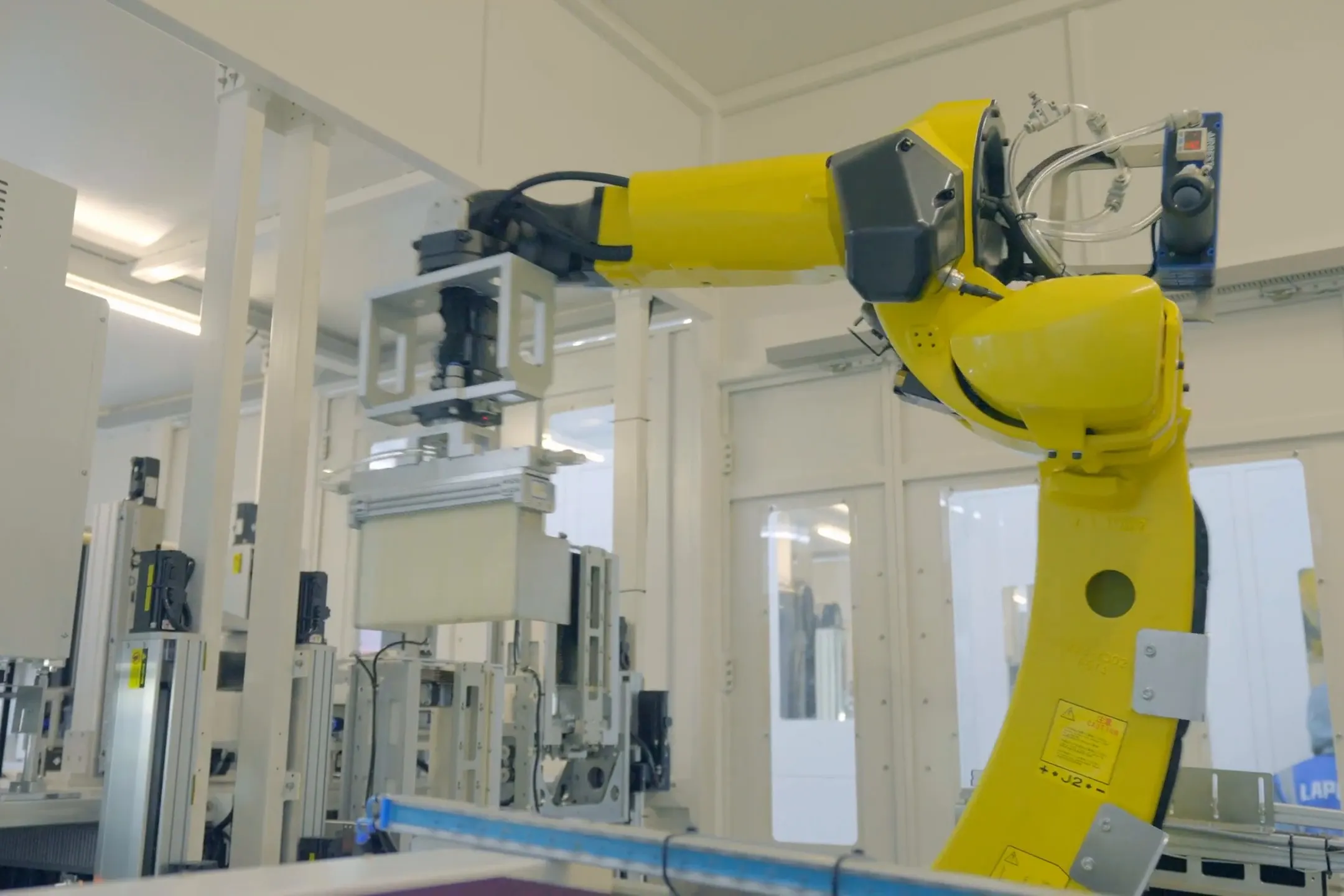
One Linux box. The edge agent runs near your machines and installs in under an hour. There are no new sensors to buy, as long as the reading already reaches a controller, so vibration monitoring on a robot can start from the tags your PLCs already hold.
Read-only PLC access. The agent reads over OPC UA, Modbus TCP or RTU, Siemens S7, EtherNet/IP, Mitsubishi MELSEC, Omron FINS, Beckhoff ADS or BACnet/IP, reads an AVEVA PI historian over the PI Web API, and subscribes to MQTT or Sparkplug B if your data already passes through a broker. It never writes back. There’s no control action and no path into the process.
One outbound connection. The agent only makes outbound HTTPS connections to us, so nobody opens an inbound firewall port. If the WAN drops, it buffers readings locally and sends them in order when the link comes back.
You won’t train a model or wait out a 90-day baseline. The detectors calculate from the first readings. The z-score and rate-of-change checks settle within a few hours of history per metric, and the baseline gets sharper from there. So a design partner can connect a machine in the morning and look at real readings the same day.
Your OT and IT teams will want a look before anything sits next to the PLCs, so send them the Buyer’s Guide. It has the security questionnaires already filled in, plus a rollback checklist. Haltless, Inc. is a US company with its office in Chicago, and we host on Google Cloud in the US central region.
What would you be testing?
Most predictive maintenance and condition monitoring tools can flag a machine as at risk and can’t tell you why. Operators stop trusting them after the third false alarm, and auditors can’t reproduce the score.
We built Haltless so that every number traces back to an event you can check. A design partnership is how you find out whether that holds on your machines. Our one-minute film shows the path on one machine, Robot 07, from a vibration reading to a signed work order. Robot 07 and its numbers are an illustrative example.
Three deterministic detectors look at every reading: a static baseline z-score, an EWMA for gradual drift, and a rate-of-change check that catches a fast change while the value is still in range. Same inputs, same outputs, every time.
Baselines rebuild nightly per machine, so two identical robots on your line don’t share thresholds. If a detector fires too often for your plant, you can tune its settings yourself, and we want to hear when you do. That’s the kind of feedback a design partnership is for.
Then comes the part we most want you to check, because it’s what we mean by explainable predictive maintenance. A machine health score should come with its working shown. Robot 07 scores 75, and the published deduction table is all you need to see why.
Start at 100. A critical alert 8 to 30 days ago costs 6 points. A critical alert in the past 7 days costs 15. That recent alert is still unacknowledged, which costs 4 more.
100 − 6 − 15 − 4 = 75Your reliability engineer can open each alert, read the date and redo the sum on a notepad. This example shows the alert side only. The full formula also carries an anomaly term, weighted by a setting you control per tenant.
From there, the alert opens a work order on the portal’s Work Orders board. ERP adapters connect to SAP S/4HANA for work orders, Oracle EBS for parts and inventory, and Microsoft Dynamics 365 for cost rollups. Every score change, alert, work-order step and sign-off goes into a per-tenant HMAC-SHA256 chain that you can verify from the portal whenever you like.
We’ve made the longer argument in Your predictive maintenance vendor can’t testify. If you’re comparing platforms, put these seven questions to every vendor, us included.
Where would it fit?
We’ve built against six industries, and each page covers the assets and compliance expectations we had in mind: automotive, energy and utilities, food and beverage, heavy manufacturing, pharma and life sciences, and plastics and injection molding.
Which machines would you connect?
Pick the robot cell that keeps tripping or the press nobody trusts, and tell us which machines you’d connect.
If you’d rather start with a number, the quote form gets you a per-machine figure, usually back in about four hours, with no obligation.